
Living in Cary, NC (2026Guide)
Is Cary the Right Triangle Suburb for You?
Thinking about moving to Cary, NC? This guide uses current Wake County MLS data to break down home prices, neighborhoods, and the 2026 commute reality. Whether you're comparing Cary to Apex or Morrisville, here's what you need to make a confident move.
Updated: April 29, 2026
Living in Cary, NC: The Standard for Triangle Living
There's a reason buyers who research the Triangle almost always end up with Cary on their shortlist. It's not just the schools or the greenways or the proximity to RTP — it's the cumulative effect of decades of intentional planning that shows up in ways you notice the moment you drive through town. The streets are wider. The parks are finished. The infrastructure works.
Cary is what happens when a suburb gets everything right over a long enough period of time.
The 2026 Market Pulse
With a population now exceeding 186,000, Cary has completed its evolution from bedroom community into one of the most sophisticated urban-suburban destinations in North Carolina. As of early 2026, the town commands some of the highest property values in the state — and holds them. The median home price sits near $625,000, days on market remain below the Wake County average, and well-maintained single-family homes in established neighborhoods still attract immediate interest.
This isn't a market that fluctuates with regional trends. It sets them.
What Makes Cary Different in 2026
The commute story starts here. Positioned at the intersection of I-40, US-1, and the NC-540 loop in western Wake County, Cary offers what is arguably the most efficient commute matrix in the Triangle — equidistant from RTP, Downtown Raleigh, and RDU International Airport. For dual-income households with split destinations, that geographic flexibility is difficult to replicate.
The employment foundation is equally strong. SAS Institute — one of the largest privately held software companies in the world — anchors Cary's job market and contributes to the town's exceptional economic stability.
And then there's the infrastructure. Downtown Cary Park has become a regional destination. Over 90 miles of paved greenways connect neighborhoods across the town. Public investment here is visible on every corner — not as a promise of what's coming, but as evidence of what's already been done.
The Honest Trade-Off
Cary's premium is real. At a median price near $625,000 and with limited new construction availability, entry isn't easy — and it isn't meant to be. Buyers who choose Cary are making a calculated long-term investment in one of the most stable residential markets in North Carolina.
For buyers comparing Cary to Apex or Holly Springs, the question isn't whether Cary is better — it's whether the premium is justified by your specific commute, timeline, and priorities. For many it is. For others, Apex's balance of newer construction and lower entry point makes more sense.
That's not a knock on Cary. It's just the honest read of the market in 2026.
Watch: Living in Cary, NC
Cary, NC Population & Demographics
Population: ~192,000 – Cary is the second-largest municipality in Wake County. It offers a "large-town" feel with extensive infrastructure that rivals many major cities, yet it is meticulously segmented into distinct, quiet neighborhood pockets.
County: Wake County (with a small western portion in Chatham County).
Region: Raleigh–Durham–Chapel Hill Triangle.
Median Household Income: ~$135,000+ – This is one of the highest in the Southeast, reflecting a workforce heavily concentrated in technology (SAS, Apple, Google), healthcare, and executive leadership.
Median Age: ~40.2 – Slightly more mature than the regional average, indicating a market dominated by established professionals, "move-up" families, and active retirees.
Educational Attainment: 70.5% of residents hold a Bachelor’s degree or higher, placing Cary among the most educated municipalities in the United States.
The Evolution of the Technology Hub
Cary has transitioned from a small railroad stop into a globally recognized center for innovation. Unlike the rapid, raw expansion seen in newer suburbs, Cary’s growth in 2026 is focused on redevelopment and refinement.
The town’s evolution is now defined by "Urban-Suburban" integration—best exemplified by the Downtown Cary Park and the transformation of the Fenton mixed-use district. This deliberate planning has created a market where real estate is viewed as a high-security "Blue Chip" investment, supported by world-class amenities and a perennially strong job market.
Thinking about moving to Cary, NC? Use the guide below to explore pricing, neighborhoods, amenities, and what to expect in today’s market.
Jump to:
• Cary Population & Demographics – Understanding the shift to 192,000+ residents and what it means for buyers.
• Cary Market Report – Real-time data on the 2026 housing climate and what buyers should expect.
• Cary Homes For Sale – Active inventory in the Wake County MLS.
• Cary New Construction vs Resale – Custom builders, production homes, and the teardown trend in 2026.
• How Cary compares to other Triangle suburbs – Cary vs. Apex vs. Morrisville vs. Holly Springs the ultimate comparison for Triangle relocators.
• Cary Experience: A day in the life – Morning commute, afternoon greenways, and evening at Fenton or Downtown.
• Cary Neighborhoods – From Preston and Lochmere to Fenton and West Cary.
• Cost of Living in Cary – Property taxes, HOA fees, utilities, and the NC due diligence process.
• Schools in Cary, NC - WCPSS rankings, enrollment caps, and private options.
• Parks and Outdoor Living – Downtown Cary Park, Bond Park, and the 100-mile greenway connection.
• Amenities and Community Services – Healthcare trifecta, retail hubs, and the 2026 event calendar.
• Dining and Entertainment in Cary – Fenton, the Social District, Herons, and upscale favorites.
• Where is Cary located – Highway access, commute matrix, and the central Triangle advantage.
• Cary Future Growth – Epic Games, South Hills, Carolina Ballet, and the Tennis Park expansion.
• Awards, Recognition, and Reputation – Why Cary is a perennially ranked top city in America.
• Working With an AI Certified Agent – How Phil Slezak uses data to protect your move.
• FAQs About Cary, NC – Quick answers to the most common relocation questions.
• About This Cary Guide – Meet Phil and learn about his approach to Triangle real estate.
Cary, NC Real Estate Market Snapshot (2026)
📊 Current Market Overview
| Metric | Value (2026) |
|---|---|
| Median Home Price | $625,000 |
| Average Price per Sq. Ft. | $253 |
| Average Days on Market | 70 Days |
| % of New Construction | ~32% |
| Year-Over-Year Price Change | +2.5% |
| Inventory Trend | Stable to Rising |
| Active Listings | 337 |
| Property Tax Rate (Wake County Only) | $0.5171 per $100 of assessed value |
| Town of Cary Tax Rate | $0.34 per $100 of assessed value |
| Typical Commute to RTP | 15–25 mins |
| Typical Commute to Raleigh | 15–30 mins |
| Typical Commute to Durham | 20–30 mins |
Cary, NC Homes for Sale - View Current Listings
👇 View Cary Listings 👇
Cary, NC Homes for Sale
Browse current listings including new construction, resale homes, and luxury properties across all Cary neighborhoods.
👇 View Current Cary ListingsListings open in a new tab — no login required
Housing in Cary, NC: New Construction vs. Resale
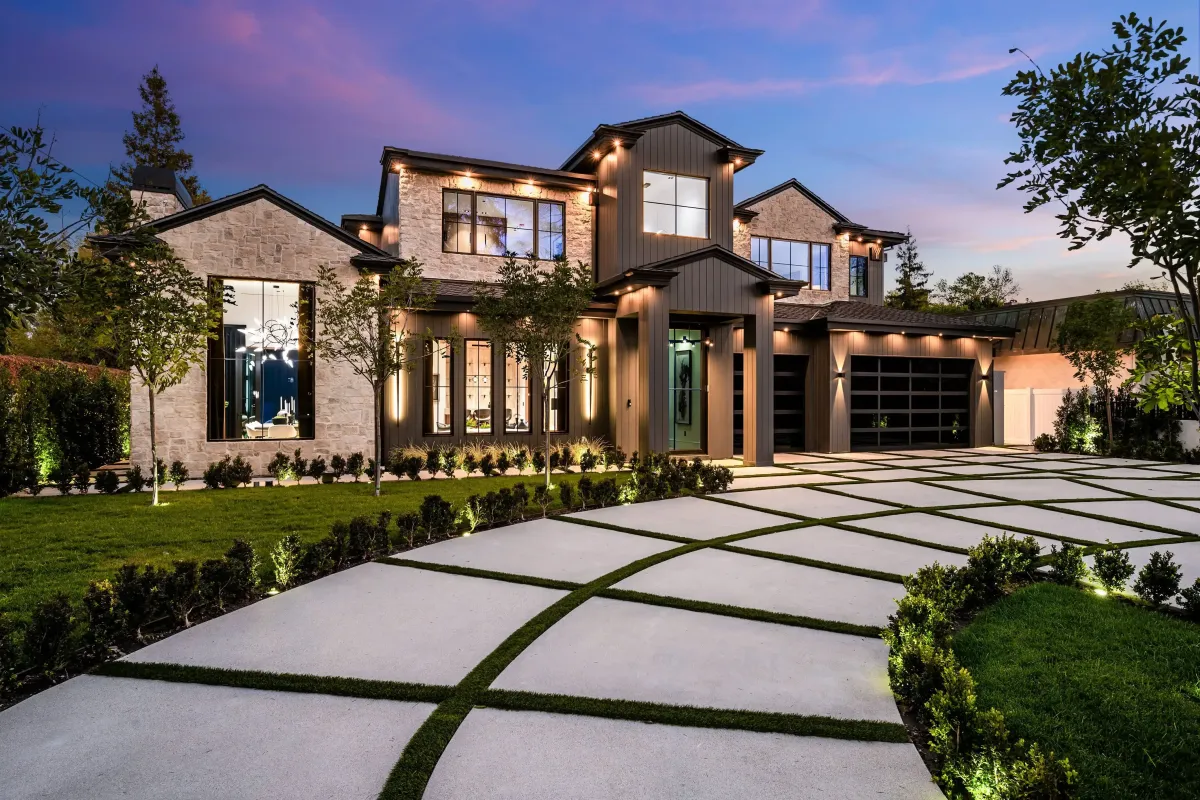
Cary's housing landscape ranges from mid-century ranch homes near downtown to luxury master-planned communities in West Cary. For most buyers, the choice comes down to modern finishes and builder incentives versus established character, mature lots, and neighborhood identity.
New Construction: Limited & Strategic
New development is concentrated in the western corridors near NC-540 and the Chatham County border, along with luxury infill projects near Downtown.
The Profile: Modern Craftsman and Transitional styles with energy-efficient tech.
The 2026 Advantage: Many builders are offering mortgage rate buydowns (4.99%–5.25%) and closing cost credits to offset 2026 inventory growth.
The Trade-off: Higher price-per-square-foot and smaller, low-maintenance lots.
Top Custom & Luxury Builders
Bost Custom Homes | Sustainable high-end luxury
Rufty Homes | Award-winning custom excellence
Loyd Builders | Expansive high-end estates
Poythress Construction | Local Cary experts since 1993
Speight Built | Energy-efficient modern designs
White Oak Builders | High-end traditional craftsmanship
Top Production & Semi-Custom Builders
Toll Brothers | Luxury semi-custom leader
M/I Homes | High energy-efficiency standards
Lennar | "Everything's Included" model
Pulte Homes | Modern, functional floor plans
Taylor Morrison | Focused on lifestyle design
Resale Homes: Character, Maturity, and Value
Established neighborhoods like Preston, Lochmere, and MacGregor Downs offer a level of privacy that new construction rarely matches.
The Profile: Larger, mature lots (0.25 to 0.5+ acres) with thick tree canopies.
The 2026 Advantage: Median resale prices near $626,000 offer a better value per square foot than new builds.
The Trade-off: Budgeting for age-typical updates (roofs/HVAC) for homes built in the 90s/00s.
Cary Housing Style Comparison
Traditional Two-Story
Common Locations: Established subdivisions (1985–2005)
Best For: Buyers wanting larger lot sizes, privacy, and mature tree canopies.
Modern Craftsman
Common Locations: West Cary near NC-540
Best For: Buyers prioritizing energy efficiency, open floor plans, and builder incentives.
Luxury Golf Community
Common Locations: Preston, MacGregor Downs
Best For: High-end buyers seeking country club amenities, prestige, and manicured views.
Luxury Townhomes
Common Locations: Downtown Cary, Fenton Area
Best For: Professionals and downsizers wanting an urban-suburban lifestyle with high walkability.
Custom Estates
Common Locations: Western Cary / Chatham County Border
Best For: High-end buyers needing private acreage, custom architecture, or Build on Your Lot flexibility.
55+ Active Adult
Common Locations: Carolina Preserve, Del Webb, Heritage Pines
Best For: Age-qualified residents focused on social amenities and low-maintenance lock-and-go living.
*Rate buydown availability and terms vary by builder, phase, and market conditions — verify directly with the builder's preferred lender. Age-qualified communities are governed by federal HOPA guidelines — buyers interested in this housing type should verify eligibility and availability directly.
How Cary Compares to Other Triangle Suburbs
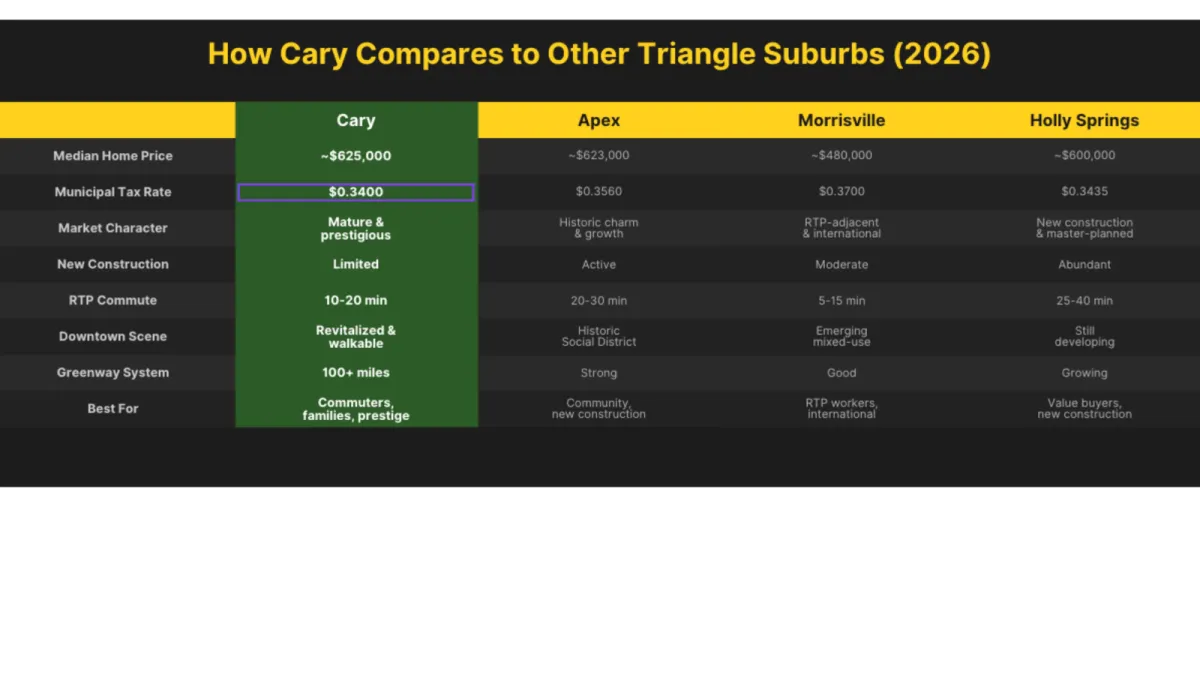
Buyers comparing Cary often also evaluate Apex, Morrisville, and Holly Springs. While all four offer top-tier quality of life, they serve different priorities regarding commute, budget, new construction availability, and town character.
At-a-Glance Comparison (2026 Data)
Apex: The Community Alternative
⚖️ The Trade-off: Apex offers newer construction options, a charming historic downtown, and entry pricing that is typically 10% lower than comparable Cary square footage. However, the average commute to RTP is 8–12 minutes longer, and the greenway scale has not yet reached Cary’s 100-mile milestone. ✅ Why Choose Cary: Cary offers the shortest average commute to RTP of any major suburb and a more mature neighborhood character with established tree canopies in communities like Lochmere and MacGregor Downs.
Morrisville: The RTP-Adjacent Option
⚖️ The Trade-off: Morrisville offers the closest proximity to RTP—some neighborhoods sit within 5 minutes of major campuses. It features a diverse international community with elite global dining. However, lot sizes are significantly smaller, and the town lacks the expansive, established park systems that Cary has perfected over 30 years. ✅ Why Choose Cary: For buyers who want RTP access but also prioritize neighborhood maturity, large private lots, and long-term resale stability, Cary delivers a more complete residential package.
Holly Springs: The Growth Alternative
⚖️ The Trade-off: Holly Springs is dominated by large master-planned subdivisions with massive amenity centers. New construction availability is significantly higher than in Cary. However, the commute to North Raleigh or Durham is typically 15–20 minutes longer. ✅ Why Choose Cary: Cary is more centrally positioned for "split-commute" households (e.g., one spouse heading to RTP, the other to Downtown Raleigh). It offers a more established, walkable downtown scene and a deeper bench of cultural amenities.
💡 Phil’s Perspective: Every week I work with buyers who come into the Triangle with a budget and a shortlist. Cary almost always wins for those prioritizing 'Career Insurance.' Because Cary is the geographic center of the region, you can change jobs three times without ever having to move houses. That geographic flexibility is the hidden ROI of a Cary address.
The Cary Experience: A Day in the Life
If you moved to Apex for its historic charm, you move to Cary for its precision. Living here feels like living in a town that has been "finished." There is a sense of predictability and polish that is hard to find elsewhere in the Triangle.
Morning: The Commuter’s Edge
The day usually starts with the "Cary advantage." If you’re heading to Research Triangle Park or RDU Airport, you aren't fighting the uphill battle of distant commuters. From most of West Cary, you’re looking at a 15-minute glide down I-40 or the 540. However, the locals know the "school run" is the real hurdle. Between 7:30 AM and 8:30 AM, the internal arteries like Kildaire Farm Road feel the weight of the town's highly active school districts. It’s a brief window of congestion, but once it clears, the town’s central positioning makes the rest of the Triangle feel remarkably close.
Afternoon: The Green Escape
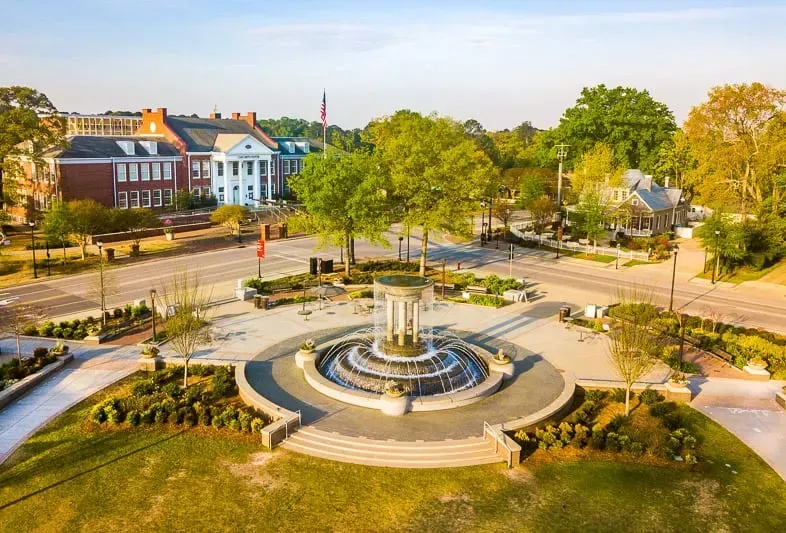
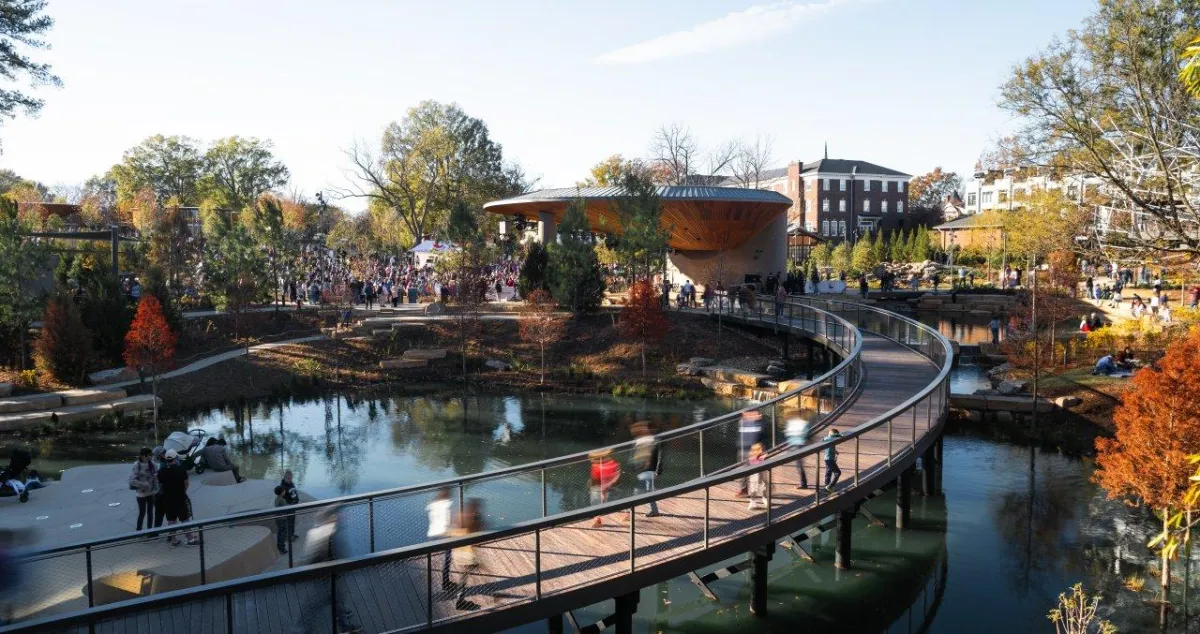
By midday, Cary’s 100-mile greenway system becomes the town's true backbone. It’s common to see professionals taking lunch-break rides or parents walking strollers through tunnels of mature hardwoods that connect one neighborhood to the next. Because the town is so established, you aren't looking at "potential" parks; you are looking at completed masterpieces like the 7-acre Downtown Cary Park. Standing on the skywalk overlooking the Academy Street fountain, the town feels both historic and futuristic.
Evening: A Choice of Two Worlds
As the sun sets, the "Lifestyle Reality" offers a choice. You might head Downtown to join the Social District crowd, grabbing a table at a local staple while enjoying the walkable, open-container zone near the theater. Or, you head toward Fenton. Here, the vibe shifts to an upscale, urban energy. The architecture is sharp, the dining is high-end (think M Sushi or Colletta), and the atmosphere mirrors the luxury shopping districts of major metros.
The Reality of the Move
The trade-off for this refined lifestyle is the "price of entry." Buyers in 2026 aren't just paying for the square footage of the home; they are paying for the fact that the guessing game is over. You know where the parks are, you know where the Apple campus is, and you know the tree canopy in your yard isn't going anywhere. It is a "Blue Chip" lifestyle—refined, intentional, and exceptionally convenient.
Popular Neighborhoods in Cary, NC
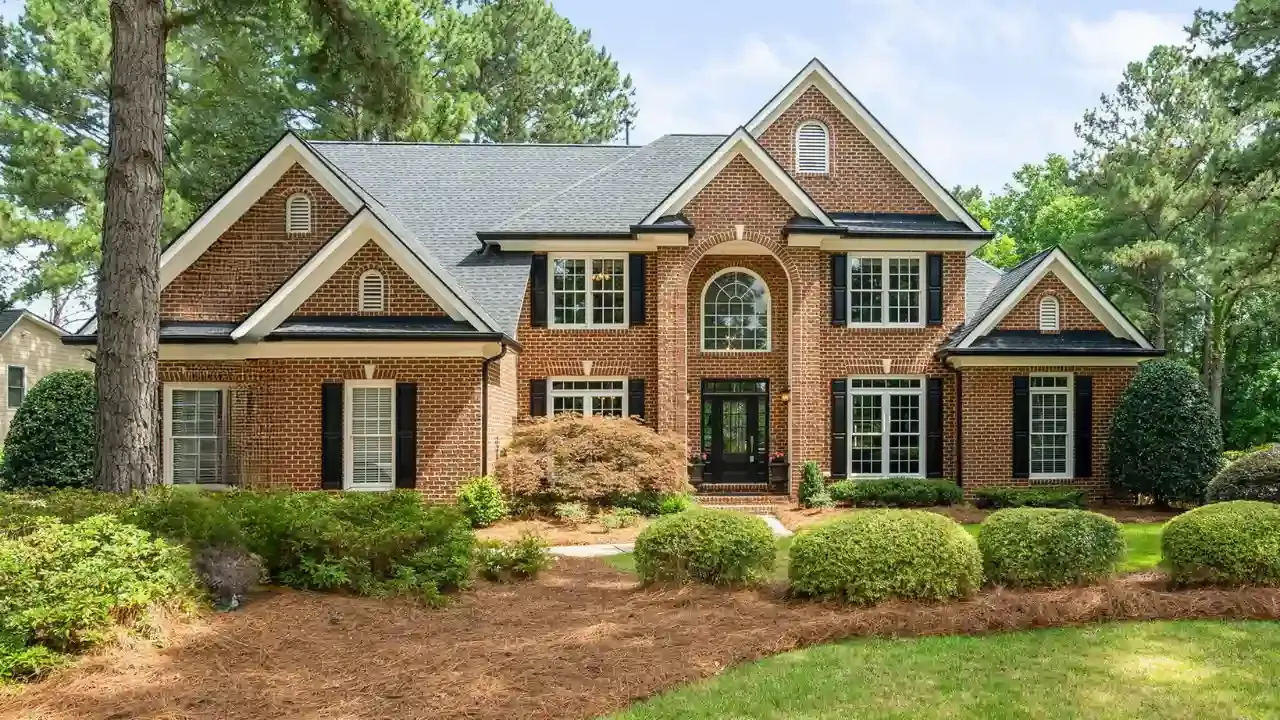
Cary’s neighborhoods are widely considered the gold standard for "planned living" in the Triangle. Whether you are looking for a walkable urban condo or an expansive golf course estate, Cary offers a finished quality that younger suburbs are still working to achieve.
Market & Tax Note (FY 2026):
Town of Cary Rate: $0.3400 per $100 valuation
Wake County Rate: $0.5171 per $100 valuation
Total Estimated Rate: Roughly $0.8571 per $100 (Combined Town + County)
Pricing reflects approximate market ranges as of Q1 2026. Properties falling outside the town limits may only be subject to the Wake County rate. Verify current tax status, special districts (like Fire or MSDs), and inventory with your agent.
The Established Classics
Preston
The Experience: Centered around the Prestonwood Country Club, this is where you'll find winding, manicured streets and 54 holes of championship golf. Living here feels like being in a permanent retreat—it is the pinnacle of Cary prestige.
The Vibe: Prestigious, manicured, and elite.
Pricing: Single-family estates typically range from $850K to $3M+.
Why It Wins: Centrally located with unmatched neighborhood name recognition and top-tier club amenities.
Lochmere
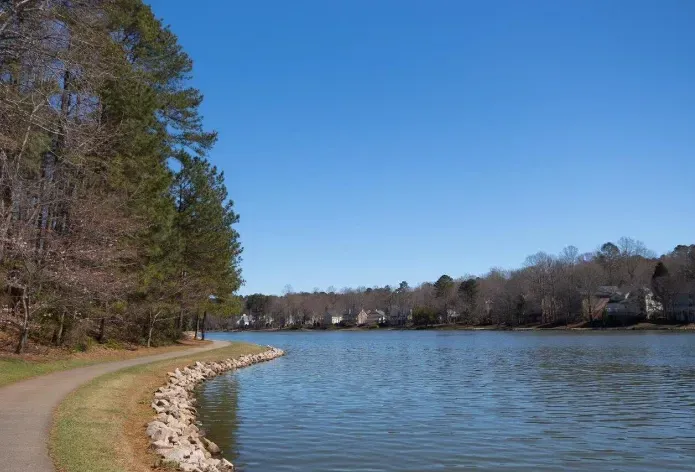
The Experience: Known for its signature lakes and extensive wooded walking trails, Lochmere feels tucked away from the city bustle. Residents are often seen kayaking or walking to the neighborhood swim and tennis club under a canopy of mature hardwoods.
The Vibe: Nature-centric luxury with a "lake-life" soul.
Pricing: Typically ranges from $650K to $1.2M+.
Why It Wins: Larger, private lots and a sense of "established quiet" that new developments can rarely replicate.
MacGregor Downs
The Experience: Built around a private golf club and MacGregor Lake, this neighborhood features stately traditional homes. Its quiet, dignified atmosphere makes it a favorite for those who value timeless Southern architecture and easy access to the region's main arteries.
The Vibe: Timeless elegance and "Old Cary" charm.
Pricing: Estates typically range from $900K to $2.5M+.
Why It Wins: Direct access to US-1 and a central location that makes getting to Downtown Raleigh or RTP effortless.
The 2026 Trending Spotlights
Amberly (West Cary)
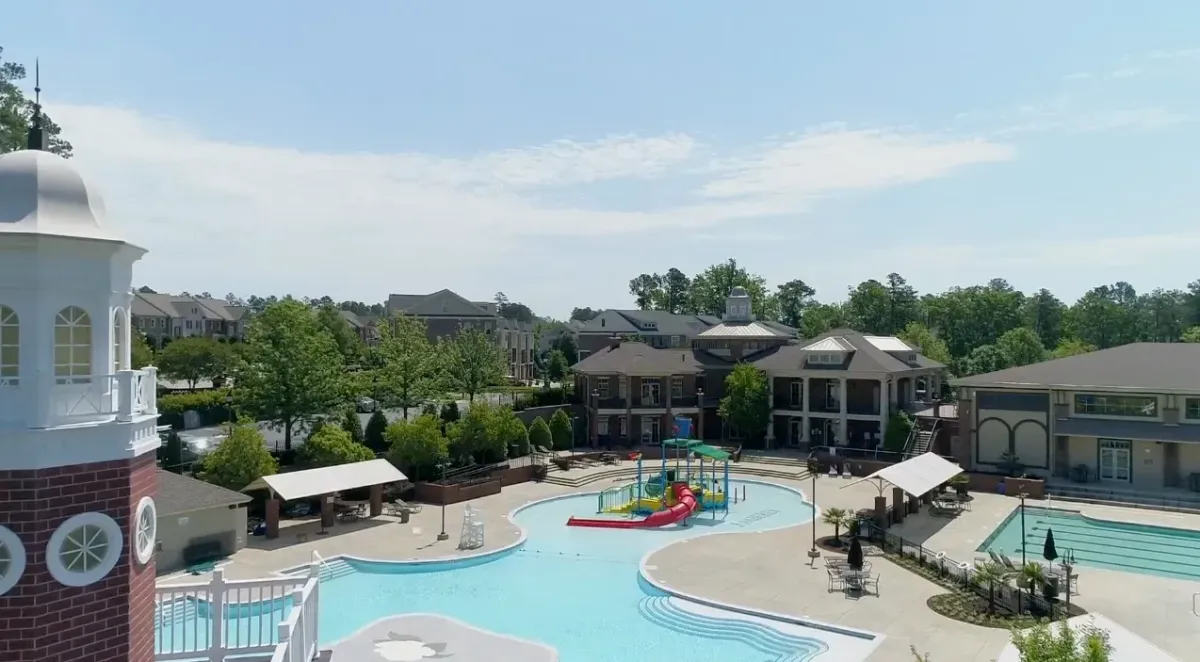
The Experience: Located on the western edge near the Apple RTP campus, Amberly is a massive master-planned community. Its resident center feels more like a resort than a clubhouse, with multiple pools and an active social calendar for families and professionals.
The Vibe: The tech professional’s home base.
Pricing: Single-family homes from $650K to $1.3M+; Townhomes from $450K+.
Why It Wins: Ideally positioned for tech relocators wanting a newer, amenity-rich environment in the heart of the 540 corridor.

Fenton / Downtown Core
The Experience: This is Cary’s newest "urban node." You might live in a luxury condo or modern townhome and walk to M Sushi for dinner or the Downtown Park for a morning coffee. It’s a "Lock-and-Go" lifestyle that finally brings Raleigh-style density to Cary.
The Vibe: Modern, urban, and high-energy.
Pricing: Luxury condos and townhomes from $700K to $1.5M+.
Why It Wins: Best for those who want upscale walkability and a vibrant social scene right outside their front door.
Carpenter Village
The Experience: Modeled after a neo-traditional small town, this area features front porches, white picket fences, and a walkable village center. It feels like a storybook neighborhood, complete with its own lake and community pool.
The Vibe: Charming, social, and architecturally distinct.
Pricing: Typically ranges from $600K to $950K.
Why It Wins: Offers a unique "village" feel that stands apart from standard suburban subdivisions.
*Verify current school assignments directly with Wake County Public Schools before making any purchase decision based on a specific school. Properties outside Cary town limits may be subject to different tax rates and special districts — confirm with your agent.
Cost of Living & Taxes in Cary, NC
Understanding the real numbers of Cary requires looking beyond the home price. In 2026, Cary remains the fiscal leader of the Triangle, maintaining the lowest municipal tax rate in Wake County despite significant investments in parks and infrastructure.
Property Taxes (2026 Rates)
Wake County and the Town of Cary operate on a "per $100 of assessed value" model.
Wake County Rate: $0.5171 (FY2026)
Town of Cary Municipal Rate: $0.3400 (FY2026)
Combined Total: Properties within Cary town limits pay a combined rate of approximately $0.8571 per $100 of assessed value.
The Cary Tax Advantage: On a $650,000 home, your combined property tax in Cary would be approximately $5,571 per year. In neighboring Apex, that same home would cost approximately $5,675. While the difference seems modest, Cary has consistently maintained the lowest municipal tax rate in Wake County—a distinction that reflects the town's disciplined long-term fiscal management. Verify current rates at wakegov.com and townofcary.org before closing.
North Carolina's Due Diligence Process
If you are relocating from out of state, the Due Diligence Fee is often the biggest culture shock. In the 2026 Cary market, this fee has stabilized but remains a significant upfront cost.
The Fee: A non-refundable payment made directly to the seller when you go under contract. It is credited toward your purchase price at closing, but it is not held in escrow.
2026 Market Standard: For competitive Cary homes in the $600K–$1M+ range, due diligence fees typically range from $5,000 to $15,000. While the bidding wars of 2022 have cooled, Cary's consistent demand means sellers still expect meaningful "skin in the game" to take their home off the market.
The Risk: This money is typically lost if you back out for any reason—inspection issues, appraisal gaps, or a change of plans.
HOA Fees & Amenities
Cary is known for its highly regulated and well-maintained Homeowners Associations.
Master-Planned (e.g., Amberly, Twin Lakes): Expect $100–$180 per month. These fees cover resort-style pools, fitness centers, and massive clubhouse facilities.
Established Subdivisions (e.g., Preston, Lochmere): Fees vary by sub-association but typically range from $500–$900 per year. Club memberships for golf and tennis are usually a separate, optional expense.
Downtown Condos / Fenton: Fees can exceed $300+ per month, but often include premium security, parking, and exterior insurance.
Utilities & Infrastructure
Cary manages its own world-class water and reclaimed water systems—a point of pride for the town's long-term sustainability goals.
Electricity: Primarily served by Duke Energy Progress. Average residential rates are approximately $0.13 per kWh.
Water, Sewer & Trash: Most residents receive a single bill from the Town of Cary. Budget for a 4% utility rate increase in 2026 as the town continues to modernize its infrastructure and expand the West Cary service area.
Internet: Cary has strong fiber coverage with Google Fiber, AT&T Fiber, and Spectrum serving major portions of the town—a meaningful advantage for remote workers and tech professionals.
Schools in Cary, NC: What Buyers Should Know
Cary is a flagship market for the Wake County Public School System (WCPSS), the largest district in North Carolina and consistently ranked among the strongest in the Southeast. For many relocating families, Cary's school reputation is the primary driver behind the town's premium property values.
The 2026 Public School Landscape
Cary's schools benefit from decades of stable enrollment planning and significant per-pupil investment. However, Cary's popularity means enrollment density is a constant factor. While schools in newer suburbs are often in flux, Cary’s boundaries are relatively mature—yet they remain subject to the district's strict management of "capped" zones.
High Schools Serving Cary
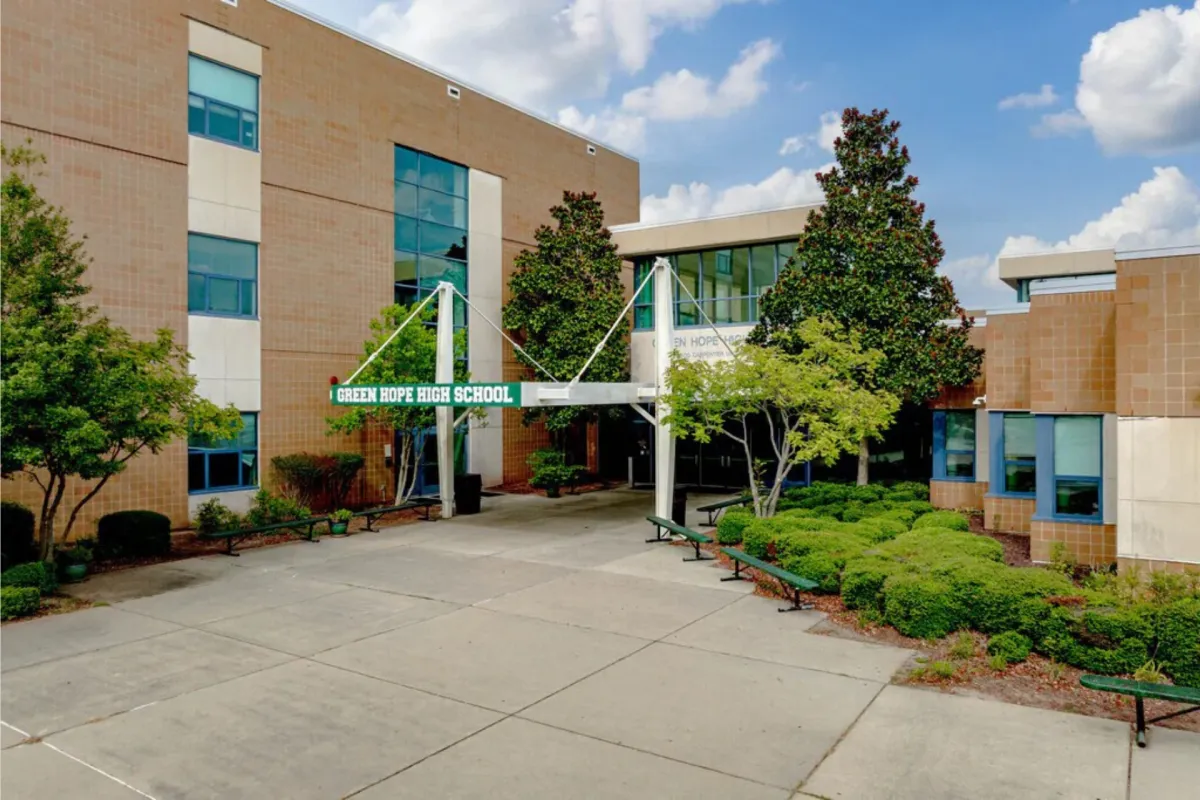
Green Hope High School: Consistently one of the highest-rated high schools in NC. Known for its "Global Teachers" program, elite athletics, and strong AP/IB programming. It serves West Cary communities like Amberly and Highcroft.
Panther Creek High School: Located in West Cary near NC-540. A modern campus with a heavy focus on technology and college-prep curriculum serving high-growth western corridors.
Cary High School: The town’s historic flagship. Recently updated, it offers specialized career academies (Engineering and Design) and a renowned International Baccalaureate (IB) program.
Athens Drive Magnet High: Serves southeastern Cary with a specific focus on Medical Sciences and Global Health.
Middle Creek High: Serves the southwestern edge of Cary near the Apex and Holly Springs borders.
Middle & Elementary Highlights
Cary boasts a deep bench of high-performing feeder schools.
Top Middle Schools: Mills Park Middle, Davis Drive Middle, and Alston Ridge Middle are among the most sought-after assignments in the district.
Award-Winning Elementary Schools: Campuses like White Oak, Weatherstone, Laurel Park, and Green Hope Elementary consistently earn "A" ratings for academic growth and proficiency.
⚠️ Critical "Capping" & Assignment Note
WCPSS utilizes an annual Enrollment Plan that can change every school year. In 2026, Cary continues to have some of the most strictly managed enrollment zones in the state.
What is a "Cap"? If a school is "capped," and you move into that zone after the cap is reached, your child may be assigned to an "overflow" school further away until a seat opens up.
Current 2026 Capped Schools in Cary: This list frequently includes Panther Creek High, Mills Park Middle, Davis Drive Middle, White Oak Elementary, and Weatherstone Elementary.
The Golden Rule: Never assume an assignment based on proximity. Always verify the specific address using the WCPSS Address Lookup Tool before signing a contract.
Charter & Private Education Options
Cary offers a high concentration of specialized alternatives for families seeking a different educational model:
Cary Academy: A nationally recognized, top-tier independent school (6-12) known for innovation and a 100% college-bound rate.
Triangle Math and Science Academy (TMSA): A high-performing STEM-focused charter school with a massive following in the local tech community.
Thales Academy Cary: A private classical education model with accessible tuition and a year-round calendar.
Cardinal Charter Academy: A popular tuition-free K-8 public charter school located near central Cary.
St. Michael the Archangel: An established K-8 Catholic school located near the High House corridor.
NCSSM (NC School of Science and Mathematics): While located in Durham, this elite, tuition-free residential high school for STEM-gifted students draws heavily from Cary’s tech-focused population.
Phil’s Perspective for Buyers
💡 Phil’s Perspective: When buying in Cary, 'School Stability' is the goal, but 'Verification' is the requirement. I've seen buyers assume a house is assigned to Green Hope because it's right across the street, only to find out it's an overflow zone. In 2026, school assignments are a moving target—make sure your agent is checking the 'capped' status of your target neighborhoods every single week.
*Always verify using the WCPSS Address Lookup Tool at wcpss.net/addresslookup before making a purchase decision.
Parks & Outdoor Living: The 90+ - Mile Connection
If other towns are defined by "destination parks," Cary is defined by connectivity. Living here means your backyard doesn't end at your property line; it merges into a 100-mile ribbon of paved trails that link neighborhoods directly to coffee shops, lakes, and employment hubs.
The 2026 Crown Jewel: Downtown Cary Park
This 7-acre masterpiece has fundamentally changed the town's social pulse. It is the region's "outdoor living room," hosting over 750 programs a year.
The Experience: You can walk the elevated Skywalk through the tree canopy, let the kids climb the iconic 20-foot cardinals in The Nest, or grab a craft beer at the Bark Bar while your dog plays in the adjacent Barkyard. It is a polished, intentional space that feels more like a botanical garden than a city park.
Hemlock Bluffs Nature Preserve: A Mountain Escape
For those who need a break from the suburban hum, Hemlock Bluffs offers a rare microclimate that feels like the North Carolina mountains.
The Experience: High bluffs overlook Swift Creek, shading a unique grove of Eastern Hemlocks that rarely exist this far east. The three miles of mulched trails and scenic overlooks at the Stevens Nature Center offer a quiet, shaded respite for birdwatching and reflection that feels miles away from the nearby retail corridors.
The Hub of Traditional Recreation: Bond Metro Park
At 310 acres, Fred G. Bond Metro Park remains the heart of Cary's outdoor identity.
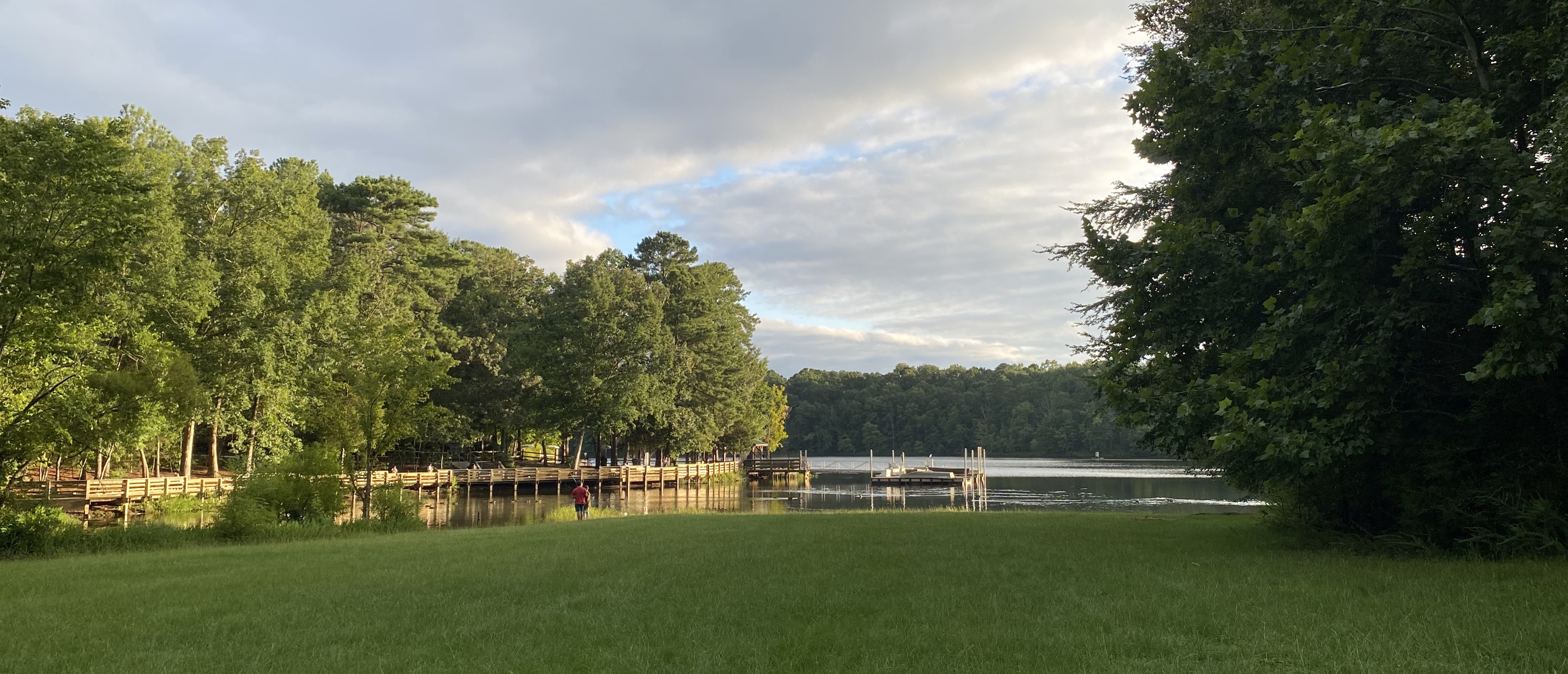
The Experience: It feels like a mountain retreat in the middle of the suburbs. You can rent a kayak at the Bond Park Boathouse, navigate the serene waters of Bond Lake, or catch a performance at the Sertoma Amphitheatre.
The Connectivity: Bond Park serves as the "Grand Central Station" for the greenway system, where the Black Creek and White Oak Creek trails intersect.
💡 Local Insight: Park at the boathouse lot early on Saturday mornings to beat the crowds, then take the boardwalk trail for the best view of the morning mist on the lake.
Destination Facilities & Specialized Sports
Cary’s outdoor offerings include professional-grade facilities that attract international attention:
Cary Tennis Park: North Carolina’s largest public tennis facility is currently undergoing a transformative $60 million expansion. In late 2026, work is finalizing on a massive new pickleball complex (25–30 state-of-the-art courts) and an enlarged 900-seat stadium. This August, it will host the first-ever Veolia Pickleball National Championships.
USA Baseball National Training Complex: A sprawling facility that serves as the training ground for the USA Baseball National Teams and future MLB stars.
Koka Booth Amphitheatre: A stunning outdoor venue tucked into the hardwoods by Symphony Lake, home to the NC Symphony’s Summer Series and the world-famous NC Chinese Lantern Festival.
WakeMed Soccer Park: Home to the NC Courage (NWSL) and NCFC, offering a high-energy "Pro Sports" atmosphere right in your backyard.
The 90-Mile Greenway Milestone
As of March 2026, Cary officially offers over 90 miles of paved greenways.
Black Creek Greenway: A 7.1-mile spine connecting Lake Crabtree to Bond Park.
White Oak Creek Greenway: The "Commuter’s Dream," which now provides a continuous off-road connection from central Cary all the way to the American Tobacco Trail and Jordan Lake.
The Result: You can bike from a West Cary neighborhood to a brewery in Downtown Cary without ever sharing the road with a car.
Amenities & Community Services: The Cary Standard
Cary offers the most complete amenity infrastructure of any suburb in the Triangle. In 2026, the combination of established retail corridors, world-class healthcare, and a high-energy downtown scene means residents rarely need to leave town for daily life.
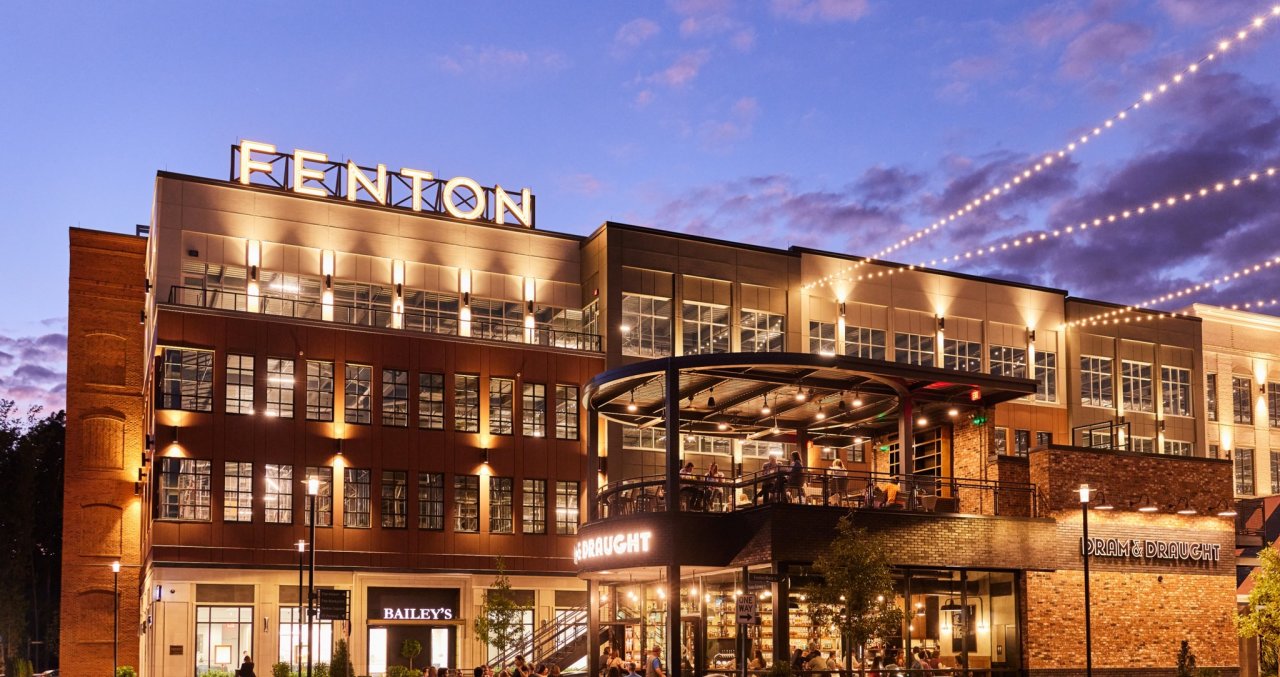
Fenton: The Luxury & Entertainment Hub Fenton has pivoted away from traditional grocery anchors to become a pure luxury destination. This 68-acre district is the Triangle's answer to a major-metro shopping district, featuring curated brands like Williams Sonoma, Pottery Barn, Arhaus, Sephora, and Nike Live.
The Vibe: It is the region's premier "night out" spot, anchored by Sports & Social (22,000 sq ft) and the Paragon Theaters, which boasts the largest cinema screen in North Carolina.
The Future: Keep an eye out for the Pagemore Hotel, currently planned for a 2027 opening, which will further cement Fenton as a staycation destination.
Downtown Cary & The Social District The heart of Cary’s social life has moved to the Academy Street corridor. The town's Social District allows you to grab a drink from spots like Bond Brothers or Dram & Draught and stroll between boutiques and the Downtown Park. It’s a genuine evening destination that offers a historic, local alternative to the modern polish of Fenton.
Waverly Place Serving Central and West Cary, Waverly Place is anchored by Whole Foods Market and a Cinemark Theater. It remains one of the most trafficked retail centers in Wake County, acting as the primary convenience hub for the town's central neighborhoods.
Parkway Village A well-established power center near Preston and central Cary featuring Harris Teeter, Best Buy, and multiple national dining brands.
📍 Note on the Cary Towne Center Site: The former mall site was purchased and demolished by Epic Games (the creators of Fortnite). While initial plans were for a massive global headquarters and gaming facility, the project is currently in a holding pattern. As of 2026, the site remains one of the largest "redevelopment wildcards" in the Triangle.
The "Healthcare Trifecta"
Cary is one of the few municipalities in the country to host all three major regional health systems within its borders:
WakeMed Cary Hospital: A full-service acute care hospital on Kildaire Farm Road.
Duke Health Cary: Primary care and specialty clinics giving residents access to the Duke network without leaving town.
UNC Health Rex – Cary: Multiple outpatient and specialty care facilities, completing a rare trifecta of all three major Triangle health systems within town limits.
The Cary Event Calendar (2026)
NC Chinese Lantern Festival: Held at Koka Booth Amphitheatre each winter. It is the most visually spectacular event in the region.
Lazy Daze Arts & Crafts Festival: A Cary staple for decades, held every August along Academy Street.
Cary Band Day: One of the East Coast's largest marching band competitions, held annually at WakeMed Soccer Park.
💡 Local Insight: For a "pro" evening at Fenton, skip the main lots and use the valet or parking decks. Grab dinner at M Sushi or Superica, then catch a show on the massive screen at Paragon. It’s the closest thing to an 'L.A. lifestyle' you’ll find in North Carolina.
Amenities as a Buyer Consideration
Central Cary (Preston/MacGregor): Best served by Parkway Village and quick US-1 access to Raleigh.
West Cary (Amberly/Highcroft): Ideally positioned for NC-540 access and the Waverly Place corridor.
Downtown/Carpenter Village: Best for those seeking the "Social District" lifestyle and walkability to the Downtown Cary Park.

The Downtown Dining Scene — Academy Street & The Social District
Downtown Cary holds Social District status, allowing you to grab a beverage in a designated cup and stroll freely between boutiques and the Downtown Park.
Bond Brothers Beer Company: The unofficial town square of Cary. A world-class brewery with a massive outdoor patio that anchors the downtown social scene.
Dram & Draught: A sophisticated craft cocktail and beer bar that has become the definitive downtown date-night destination.
Lassiter's Mill Tavern: A local staple known for its relaxed atmosphere and a patio that is perpetually packed on warm evenings.
Fortnight Brewing: A British-inspired brewery near the core with a loyal local following and a neighborhood pub feel.
The Fenton Experience: Upscale & High-Energy
For buyers relocating from major metros, Fenton offers a curated, big city energy that rivals the best districts in Raleigh or Charlotte.
M Sushi: Widely regarded as one of the best sushi experiences in the Southeast; the Omakase here is a rite of passage for local food seekers.
Colletta: A sophisticated Italian kitchen with wood-fired dishes that rivals the best restaurants in North Hills.
Superica: A lively Tex-Mex concept from Ford Fry with a margarita program that keeps the patio buzzing all weekend.
True Food Kitchen: A health-focused concept popular with Cary's highly active and health-conscious demographic.
Sports & Social: A 22,000 sq ft entertainment complex—it is the primary social anchor for Fenton’s nightlife.
📍Expert Advice: If you are looking for a 'quiet' night out, avoid Fenton on weekend evenings when the crowds from Raleigh and Durham converge. Stick to the neighborhood spots like Lucky 32 or the hidden bistros in Preston for a more local Cary feel.
Casual Gems & Local Favorites
These are the spots that reflect Cary's diverse, international community and long-standing local culture.
Lucky 32 Southern Kitchen: A legendary Cary institution on Kildaire Farm Road. Known for high-end renderings of Southern classics, their garden terrace is arguably the best spot in town for a long Sunday brunch. This is also one of my favorites and their Salmon and Peanut Butter pie is outstanding!
Sassool: A beloved Lebanese Mediterranean café known for the freshest housemade hummus and mezze in Wake County.
Bosphorus Turkish Cuisine: One of the Triangle's most acclaimed Turkish restaurants—a true testament to Cary's global demographic.
Sushi Blues Café: A longtime local favorite combining high-quality sushi with a live blues atmosphere.
📍 Local Tip: Maximillian’s Grille is one of my personal favorites. The menu rotates seasonally, but if the Voodoo Tuna is available, order it without hesitation—it is one of the best bites in the region. If they are out, ask your server for a recommendation; they have never steered me wrong.
The Pinnacle of Fine Dining: Herons
Located inside The Umstead Hotel and Spa, Herons is a Forbes Five-Star and AAA Five Diamond recipient. If you are celebrating a home closing or entertaining high-level clients, this is your table. It represents the "Blue Chip" lifestyle that Cary has perfected.
Arts, Culture & Entertainment
Koka Booth Amphitheatre: The premier outdoor venue for national touring acts and the spectacular NC Chinese Lantern Festival.
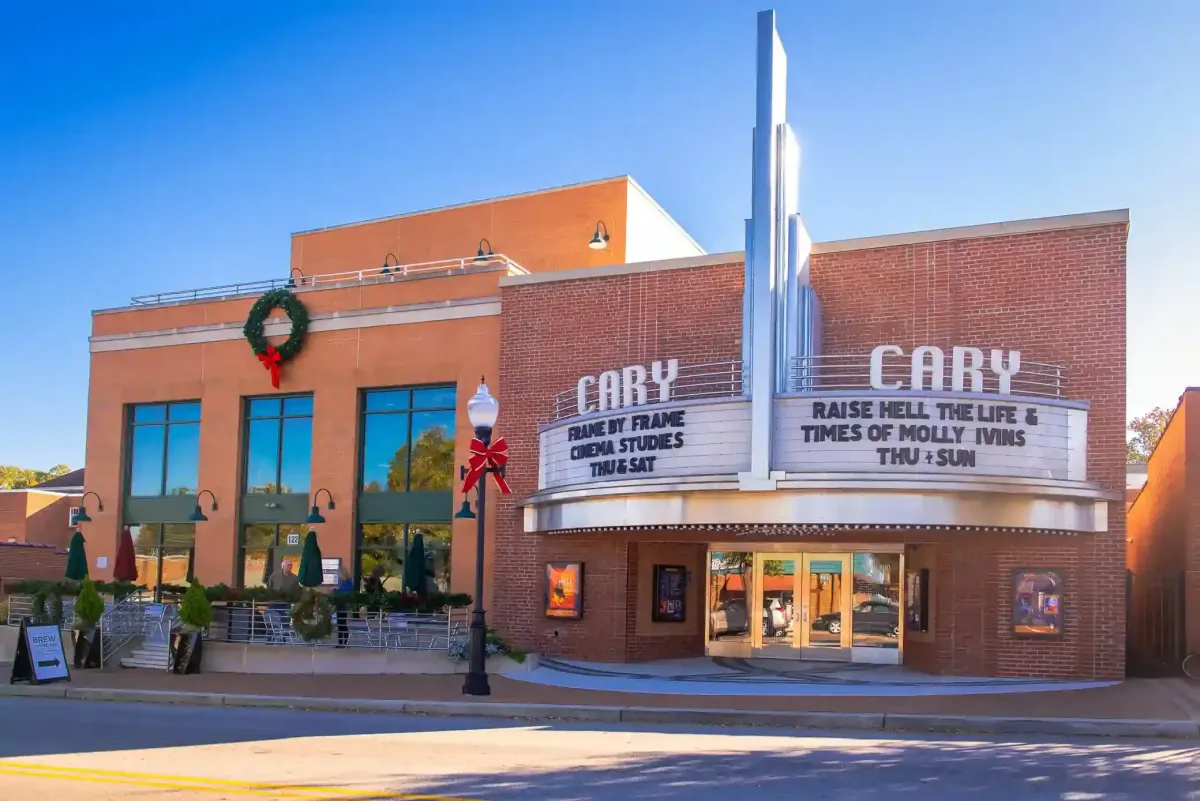
The Cary Theater: A restored historic venue on Academy Street for independent film and live comedy.
Paragon Theaters at Fenton: Home to the largest cinema screen in North Carolina with luxury reclining seating.
📍 Local Insight: Cary residents know the "Secret Window" for the Lantern Festival—go on a Tuesday or Wednesday evening in early December to avoid the massive weekend crowds. The experience is much more intimate.
Where Cary Is Located in the Triangle
Cary is situated in central Wake County, positioned directly between the urban core of Raleigh and the Research Triangle Park (RTP) employment hub. With a 2026 population of approximately 186,000, the town serves as the primary strategic anchor for the entire region.
The "Mid-Loop" Advantage
The most significant infrastructure development for Cary residents in 2026 is the full integration of the NC-540 Triangle Expressway expansion.
Complete 540 Access: The toll road now extends east from Apex, creating a continuous loop that connects Cary directly to I-40, US-401, and I-42.
The Benefit: This has meaningfully reduced surface street congestion on Kildaire Farm Road and Cary Parkway, making cross-town travel significantly more predictable than in years past.
Commuter Flexibility: Because Cary touches both I-40 and NC-540, you are never "trapped." If one major artery has an accident, you have multiple high-speed alternatives to get home.
📍 Phil’s Perspective: Cary is often called a '15-minute city.' In 2026, almost 80% of your daily needs—groceries, elite schools, and major employers—are within a 15-minute radius. It’s a level of efficiency that saves you hours every week.
The Central Positioning Advantage
Cary is the ultimate "career insurance" location. Because you are dead-center, your commute remains manageable whether your office is in Research Triangle Park, Downtown Raleigh, or the North Hills corridor.
Cary is the only suburb that offers a sub-20-minute drive to both the region’s premier airport (RDU) and its largest private employers, providing a level of geographic convenience that no other Triangle town can match.
📍 Phil’s Tip: This is the only neighborhood where you can truly get lost in the trees and forget you're 10 minutes from a major Apple hub.
Commute Reality — 2026 Estimates
Cary’s central positioning allows residents to reach the Triangle's major hubs via multiple "cross-corridors." This flexibility ensures you aren't trapped if one highway is backed up.
Research Triangle Park (RTP)
Distance: 8–12 miles
Peak Commute: 15–25 mins
Primary Route: I-40 West or NC-540
Downtown Raleigh
Distance: 8–12 miles
Peak Commute: 18–30 mins
Primary Route: I-40 East or US-1 / Wade Ave
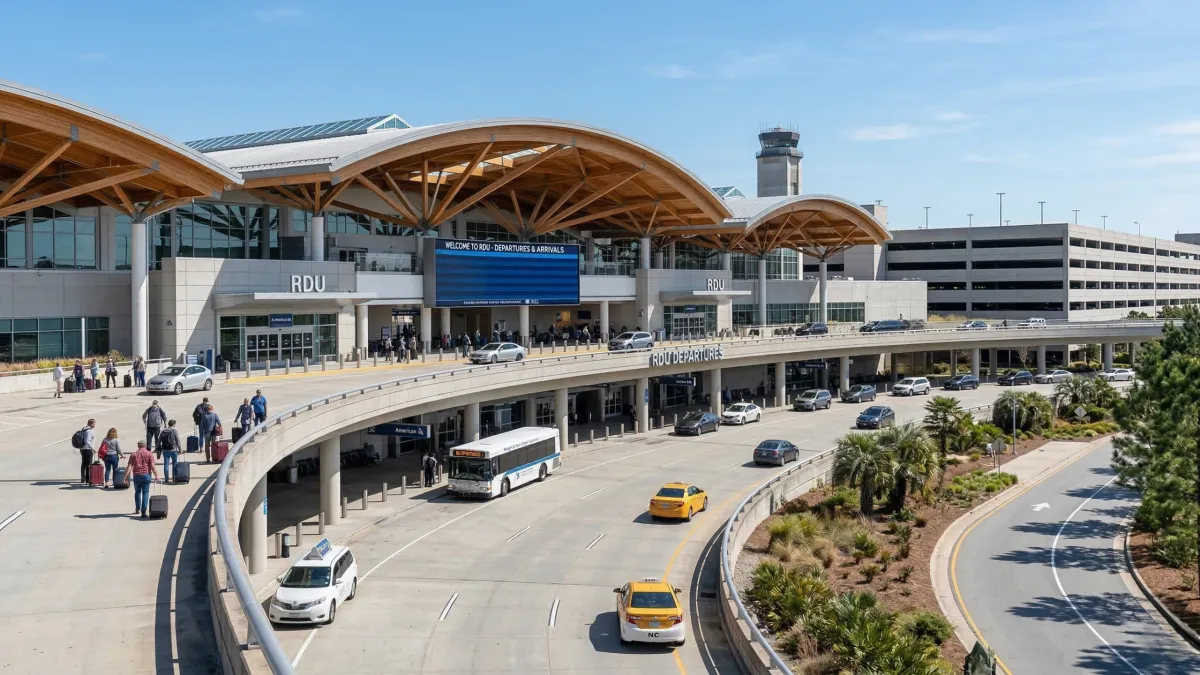
RDU International Airport
Distance: 7–10 miles
Peak Commute: 12–18 mins
Primary Route: I-40 or Aviation Pkwy
Downtown Durham
Distance: 18–22 miles
Peak Commute: 25–40 mins
Primary Route: I-40 West to NC-147
North Hills / Midtown
Distance: 12–15 miles
Peak Commute: 20–30 mins
Primary Route: I-40 to I-440
💡 Commute Note: Estimates reflect typical peak-hour conditions as of Q1 2026. Actual times vary by neighborhood, departure window, and toll road usage. Reliability is highest for West Cary neighborhoods with direct NC-540 proximity.
💡 Phil’s Perspective: Don't get hung up on the 'West Cary vs. Central Cary' debate. Both offer elite lifestyles—the real choice is whether you want a modern resort feel (West) or established tree canopies (Central).
Future Growth & Development in Cary, NC
Unlike its neighbors, Cary's growth story in 2026 is not about raw expansion—it is about strategic refinement. The town has largely built out its residential footprint and is now focused on redevelopment, densification, and infrastructure upgrades that define its next chapter as the Triangle's premier urban-suburban destination.
The Epic Games Wildcard
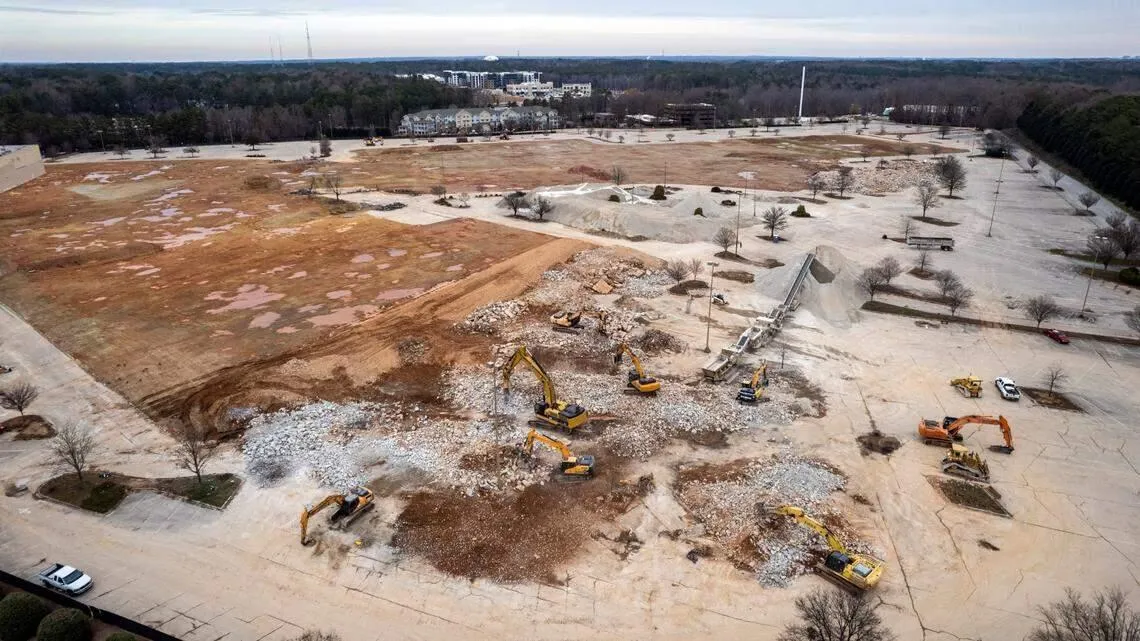
The most significant and closely watched development story in Cary is the former Cary Towne Center site, purchased and demolished by Epic Games—the creators of Fortnite and Unreal Engine.
The Original Vision: A massive global headquarters campus on the 980,000 sq ft site, featuring park-like green space and a design intended to blend with the community.
The 2026 Status: The project is currently in a holding pattern. As of Q1 2026, the site remains cleared and undeveloped with no confirmed construction timeline.
The Impact: When this campus moves forward, it will represent one of the most significant corporate developments in NC history, with major implications for property values along the I-40 corridor.
⚠️ Buyer Note: Do not make a purchase decision based on the Epic Games timeline. Monitor local news for confirmed updates before factoring this into any neighborhood evaluation. The fundamentals of the surrounding area are strong even without this project.
South Hills: Starline at South Hills
One of the most culturally significant developments in Cary's history is taking shape near the US-1 and I-40 interchange. By 2028, this site will be home to a premier arts-anchored mixed-use district.
The Anchor — Carolina Ballet: The Triangle's professional ballet company is putting down permanent roots here with a 70,000 sq ft facility featuring studios, a costume shop, and a 300-seat black box theater.
The Vision: This brings a major cultural institution into the daily fabric of the city, expected to draw over 86,000 visitors per year to the district.
The Broader District: Developer LODEN's Starline at South Hills will surround the ballet with 100,000+ sq ft of retail, restaurants, hotels, and greenway connections.
Downtown & West Cary Evolution
Cary Tennis Park Expansion: A transformative $60 million expansion is finalizing in late 2026, adding a premier pickleball complex and a 900-seat stadium for international events.
The Pagemore Hotel: A luxury boutique hotel planned for the downtown core with a projected 2027 opening.
NC-540 Optimization: Continued toll road enhancements are making West Cary (27519) one of the most commute-predictable corridors in the region.
What This Means for Buyers
Cary is a market in refinement. You are entering the most stable residential market in the Triangle at a moment when strategic redevelopment is adding massive long-term value anchors.
📍 Phil’s Perspective: Cary is effectively 'built out.' When you buy here, you aren't just buying a house; you are buying into a scarcity-driven market. The shift toward arts (South Hills) and elite athletics (Tennis Park) ensures Cary remains the 'Blue Chip' choice of the Triangle.
Important Disclosure
The development projects, infrastructure timelines, and employment projections referenced in this section are based on publicly available information as of Q1 2026. All development plans, timelines, and projections are subject to change, delay, modification, or cancellation without notice. Phil Slezak and LPT Realty make no representations or warranties regarding the completion, timing, or impact of any development project referenced herein. Buyers should conduct independent due diligence and verify current project status directly with the Town of Cary, Wake County, and relevant developers before making any purchase decision based on future development expectations.

Awards & Recognition: The Gold Standard
Cary has built a Blue Chip reputation that reflects decades of disciplined planning and high-level community investment. These accolades are more than just trophies—they are indicators of long-term property value and municipal health.
National Rankings (2025–2026)
#5 Best Place to Live in the U.S. (2025-2026): U.S. News & World Report ranked Cary in the top 5 nationally and #1 in North Carolina, citing its elite living standards and abundant high-paying tech opportunities in nearby RTP.
#4 Best Medium-Sized City in America: Recognized for balancing big city infrastructure with a safe, close-knit community feel.
#1 Best Place to Raise a Family in NC: Niche.com continues to rank Cary as the premier destination for families, scoring it an A+ for public schools and diversity of amenities.
Top 5% Nationally for Job Market Strength: A reflection of Cary’s proximity to Apple, Google, and the SAS Institute headquarters.
Safety & Financial Stability
Safest City in America (Top 10): Cary consistently ranks as one of the safest municipalities of its size in the United States. In 2026, it maintains a violent crime rate significantly lower than the national median, providing the "peace of mind" that drives the town's high residential demand.
Triple-AAA Bond Rating: Cary is one of the few municipalities in the country to maintain a perpetual AAA rating from all three major agencies: S&P, Moody's, and Fitch.
💡 Phil’s Perspective: For a buyer, a AAA bond rating is a massive 'hidden' benefit. It means the town can build $60 million tennis parks and 100 miles of greenways at the lowest possible interest rates, keeping your property taxes efficient while your lifestyle amenities stay world-class.
Infrastructure & Design Excellence
#1 Public Playground in America (2025): "The Nest" at Downtown Cary Park was named the top public playground in the U.S. by USA Today’s 10Best.
2025 American Architecture Award: Downtown Cary Park was one of only five parks in the nation to receive this prestigious honor, recognizing its innovative "Urban Design" and social impact.
Innovation by Design Award: Fast Company recognized Cary for its forward-thinking approach to urban landscape and community connectivity.
📍 Phil’s Perspective: When I speak to out-of-state buyers, they often ask if Cary is 'overhyped.' The data says no. Whether it’s the lowest tax rate in the county or the #1 ranked park in the country, Cary consistently delivers on the premium it commands. You aren't just buying a house here; you're buying into the best-managed town in the state.
Cary vs Apex vs Raleigh: How Do They Compare?
| Feature | Cary | Apex | Raleigh |
|---|---|---|---|
| Overall Market Profile | Established & centrally located | Balanced suburban growth | Broader urban-suburban mix |
| Median Home Price | $625,000 | $623,000 | $450,000 |
| Typical Housing Mix | Established resale, townhomes, some newer West Cary construction | Resale homes, newer suburban communities, active new construction | Urban infill, townhomes, established neighborhoods, suburban subdivisions |
| Lot Sizes | Smaller to moderate suburban lots | Moderate lots with some newer planned communities | Varies widely by neighborhood and housing type |
| New Construction | Limited to moderate | Moderate to strong | Varies by corridor and redevelopment area |
| Typical Commute to RTP | 15–25 mins | 20–30 mins | 20–35 mins |
| Typical Commute to Downtown Raleigh | 15–30 mins | 20–35 mins | In-city access varies by neighborhood |
| Growth Pattern | More built-out and established | Steady suburban expansion | Ongoing redevelopment and outward growth |

Work With an AI Certified Real Estate Agent
Many buyers relocating to Cary begin their search online months before visiting the area, making access to accurate data and real-time market insights critical.
Working with an AI Certified Real Estate Agent provides an additional layer of analysis when evaluating home prices, neighborhood trends, and inventory shifts across the Triangle.
Phil Slezak has been recognized in publications such as Yahoo Finance for leveraging technology and data-driven strategies within the real estate process, combining that approach with over two decades of local market experience.
This approach allows buyers and sellers to evaluate:
• Neighborhood-level pricing trends
• Inventory changes and timing opportunities
• New construction vs resale comparisons
• Property-specific value considerations
By combining data analysis with local expertise, clients are able to make more informed decisions based on current market conditions rather than assumptions.
Quick Summary for Buyers
Cary, NC is best suited for buyers who want access to Wake County Public Schools, manageable commute times, stable appreciation, and a refined suburban lifestyle — while remaining connected to RTP and Raleigh.
Want a list of the best Cary neighborhoods for your budget + commute?
👉 Text CARY to 919-899-4554 for a custom neighborhood short list.
Frequently Asked Questions About Cary, NC
Is Cary, NC a good place to live?
Cary is widely considered the gold standard of North Carolina suburbs. In 2026, it remains the #1 ranked place to live in NC and a Top 5 destination nationally according to U.S. News & World Report. Buyers choose Cary for its Blue Chip stability — featuring one of the lowest municipal tax rates in Wake County, a 100-mile greenway network, and a central layout where elite schools, global tech hubs like SAS, and luxury retail are all within a short radius.
How much do homes cost in Cary, NC 2026?
As of Q1 2026, the median home price in Cary is approximately $625,000. The market is bifurcated:
Entry Level: Established townhomes and smaller detached homes in Central Cary range from $450K–$550K.
Mid-Market: Standard 4-bedroom family homes in popular communities like Amberly or Carpenter Village range from $650K–$850K.
Luxury: Estate homes in premier communities like Preston, MacGregor Downs, and Lochmere frequently range from $1.2M to over $3M.
Because Cary is largely built out, the market is driven by high demand for limited resale inventory — a supply dynamic that structurally supports long-term appreciation.
What zip codes are in Cary, NC?
Cary is primarily served by four main zip codes:
27511: Central and East Cary, including the revitalized Downtown and the Fenton district.
27513: North and Central Cary, covering much of the SAS campus and the Preston corridor.
27518: South Cary, known for established luxury communities like Lochmere and MacGregor Downs.
27519: West Cary, the high-growth tech corridor bordering RTP and the NC-540 loop.
What is the property tax rate in Cary, NC in 2026?
Cary has consistently maintained one of the lowest municipal tax rates in Wake County. For FY2026, properties within Cary town limits pay a combined rate of approximately $0.8571 per $100 of assessed value — Wake County at $0.5171 plus Town of Cary at $0.3400.
On a $625,000 home, your total annual tax is approximately $5,357 — notably lower than neighboring Apex at approximately $5,457 or Morrisville at approximately $5,563 for the same home value. Always verify current rates at wakegov.com and townofcary.org before closing.
How do school assignments work in Cary, NC?
Cary is part of the Wake County Public School System (WCPSS). Schools here are top-tier but often experience high demand.
The Cap Reality: Several Cary schools — including Panther Creek High, Mills Park Middle, Davis Drive Middle, White Oak Elementary, and Weatherstone Elementary — are currently capped for the 2026–27 school year. This means new residents may be assigned to an overflow school if the cap has been reached.
The Golden Rule: Assignments are address-specific. Never purchase a home based on its proximity to a school building. Always verify your specific address using the WCPSS Address Lookup Tool at wcpss.net before making an offer.
How What is the commute like from Cary to RTP and Raleigh?
Cary is the most centrally located suburb in the Triangle, offering the most efficient commute patterns in the region:
To RTP: 10–20 minutes via I-40 or NC-540
To Downtown Raleigh: 15–25 minutes via I-40 East or US-1
To RDU Airport: 12–18 minutes via NC-540 or I-40
To Downtown Durham: 25–35 minutes via I-40 West
To Chapel Hill / UNC: 25–35 minutes via I-40 West
Cary's mid-loop position means you have multiple highway options — I-40, US-1, US-64, and NC-540 — to bypass daily congestion depending on your destination.
Is Cary, NC still growing?
Cary is no longer growing through sprawl — it is growing through vertical urbanization and strategic refinement. The most significant growth centers in 2026 are:
Fenton: A 68-acre luxury mixed-use district that has become the new anchor for Triangle nightlife and upscale retail.
Downtown Cary: A major infill movement centered around the 7-acre Downtown Cary Park and the expanding Social District.
The Epic Games Site: An 87-acre redevelopment wildcard on the former Cary Towne Center footprint, slated for a global tech headquarters currently in a holding pattern.
South Hills: A 2028-targeted cultural district anchored by Carolina Ballet at Starline at South Hills.
WAre there new construction homes for sale in Cary, NC?
New construction in Cary is limited and carries a premium.
West Cary: Small enclaves of luxury new builds are available in the 27519 zip code, typically starting in the $800s to $1.2M+.
Infill Teardowns: In Central Cary, buyers are actively purchasing older homes to demolish and replace with custom 2026-style estates — a growing trend driven by the scarcity of large lots in established corridors.
Townhomes: A steady supply of luxury townhomes near the Fenton and Downtown corridors, often starting in the high $600s.
Buyers with new construction as a top priority should also evaluate Apex and Morrisville where active builder inventory is significantly more available.
WHow does Cary compare to Apex, NC?
This is the most common comparison in Wake County.
Choose Cary if: You prioritize the shortest possible commute to RTP and RDU, want access to a 100-mile greenway network, prefer established tree-canopy neighborhoods, and want one of the lowest property tax rates in Wake County.
Choose Apex if: You want more new construction single-family options for your dollar, a more traditional small-town historic feel anchored by the Salem Street Social District, or want proximity to the upcoming $3 billion Veridea development.
Cary generally commands a 10–15% price premium over Apex for similar square footage due to its central location, mature infrastructure, and scarcity-driven inventory dynamics.
💡 Phil's Perspective: The most common mistake I see out-of-state buyers make is underestimating the Cary school cap. If you are moving for a specific school, the house is only half the battle — we have to ensure the school seat is actually available at your specific address. In 2026, Cary is a Blue Chip market — stable, safe, and it holds value better than anywhere else in the state. But you have to know the local rules to win here.
Verify current school assignments at wcpss.net, tax rates at wakegov.com and townofcary.org, and market data with your agent before making any purchase decision.

Next Steps: Talk to Phil About Cary
Ready to Make Your Move to Cary?
You’ve done the research. You know the "100-mile" greenway story, the "Healthcare Trifecta," the school capping realities, and why Cary maintains the lowest tax rate in the county. The next step is a conversation with someone who understands how these 2026 market dynamics impact your specific bottom line.
I can help you:
Pinpoint the Right Corridor: Identify whether the high-energy lifestyle of Fenton, the mature prestige of Preston, or the tech-centric growth of West Cary fits your 5-year plan.
Navigate the "Cary Cap": Get a real-time assessment of school enrollment caps before you fall in love with a specific street.
Analyze the "Wildcards": Evaluate how the Epic Games headquarters and the South Hills redevelopment will specifically affect the appreciation of the neighborhoods you're targeting.
Master the NC Process: If you’re relocating from out of state, I’ll walk you through the "Due Diligence" culture shock so you don't leave money on the table.
Exclusive Programs: Determine if you qualify for the Buyer Home Guarantee or the Sold Zero Commission Program to maximize your equity.
Whether you are in the "just curious" phase or need to be under contract within 30 days, getting a local strategy in place now is the most important move you can make.
Three ways to connect:
📅 Schedule a 15-Minute Strategy Call — Private Call Link
📱 Text CARY to 919-899-2320 — Get instant market updates, "coming soon" alerts, and neighborhood comparisons.
🏠 Request Current Cary Listings — See exactly what is active, pending, and hitting the market in the next 7 days.
📍 Phil’s Final Perspective: Cary is a 'Measure Twice, Cut Once' kind of market. Because inventory is so tight and the standards are so high, the best homes often sell before they hit the public portals. My job is to make sure you aren't just seeing what's left over, but what's actually available.
DISCLAIMER: All stats, data, house pricing, and local project timelines mentioned on this page are subject to change and are provided merely as information at the time of publication (Q1 2026). This guide is updated regularly using Wake County MLS data and local market reporting, but buyers should independently verify all information—especially school assignments and tax jurisdictions—before making a purchase decision.
Thinking About Moving to Cary, NC?
👉 Text CARY to 919-899-4554 for a custom neighborhood short list.
👉 Schedule a call with Phil to discuss commute goals, budget, and neighborhood fit.
Get early access to Cary listings and market updates.
PHIL SLEZAK REAL ESTATE
CONNECT
OUR PROGRAMS
LEGAL
Explore more Triangle relocation guides including Cary, Holly Springs, Fuquay-Varina, Wake Forest, and Raleigh.
Phil Slezak Real Estate
421 Fayetteville Street, Suite 1100
Raleigh, NC 27601
(919) 355-PHIL or 984-789-4554


© Copyright 2026. Phil Slezak Real Estate. All Rights Reserved.